Our Youth Center is made up of three age-specific rooms and engages kids and teens living at The Crossing in afterschool activities, homework help, financial literacy classes, Bible studies, and more. Consistency is key in our Youth Center, and we want you to meet the three full-time staff members who consistently show up for the kids every single day:
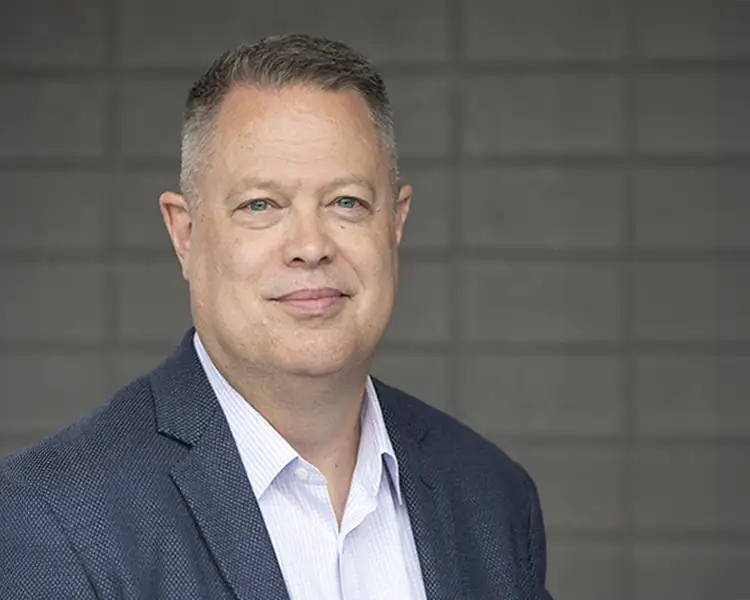
MC Crawford – Children, Youth & Family Manager
What drew you to the Mission?
“I started volunteering in a shelter setting when I was 14. It was in these roles that I realized the profound impact of helping people feel truly seen and heard. It brought me so much joy simply by having meaningful conversations with individuals who were craving connection, and that experience planted the seed for the work I do today.
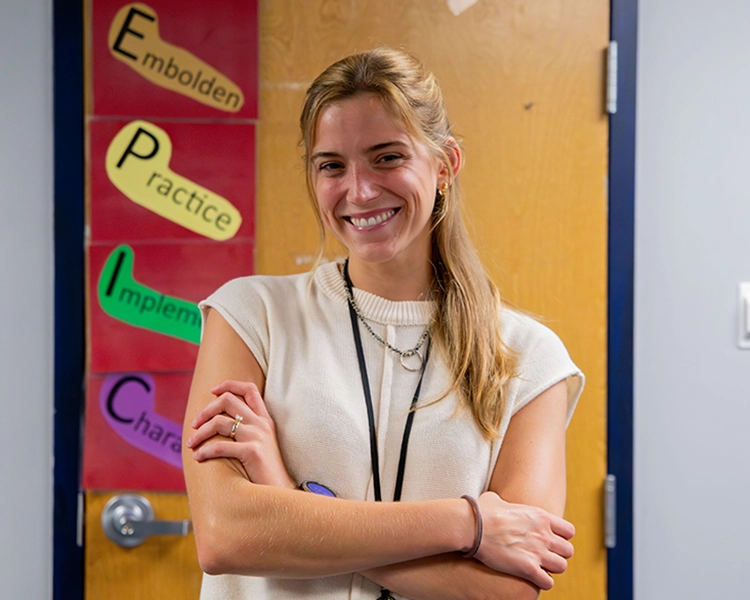
A few years ago, while working for a consulting firm, I supported the CEO on initiatives he was pursuing to address homelessness in our community. Through this experience, I was given a behind-the-scenes look at the development of policies and programs benefiting those experiencing homelessness. I came to care deeply about the subject and was intrigued by the complexity and depth of the issue. So, when I eventually left consulting, I felt called to continue working in this space.
Not long after, I applied for the Children, Youth and Family Manager position. Within a week, I accepted the role, and I’ve never looked back. I know without a doubt that this is exactly where I’m meant to be. I believe deeply in the work we’re doing, and that belief fuels me every single day. This is my ‘why.’”
What are some of the key things you focus on as a department?
“Once upon a time, the parents of the children we serve were vulnerable children themselves. Many of them didn’t have parents who knew how to invest in them—parents who would encourage them to stay in school, read to them at night or validate their emotions when they needed it most. They lacked the love, tools and support every child deserves.
Fast forward one generation, and now—while some parents in the world have full ‘parenting toolbelts’—other parents are still missing some of the tools they need to help their child succeed.
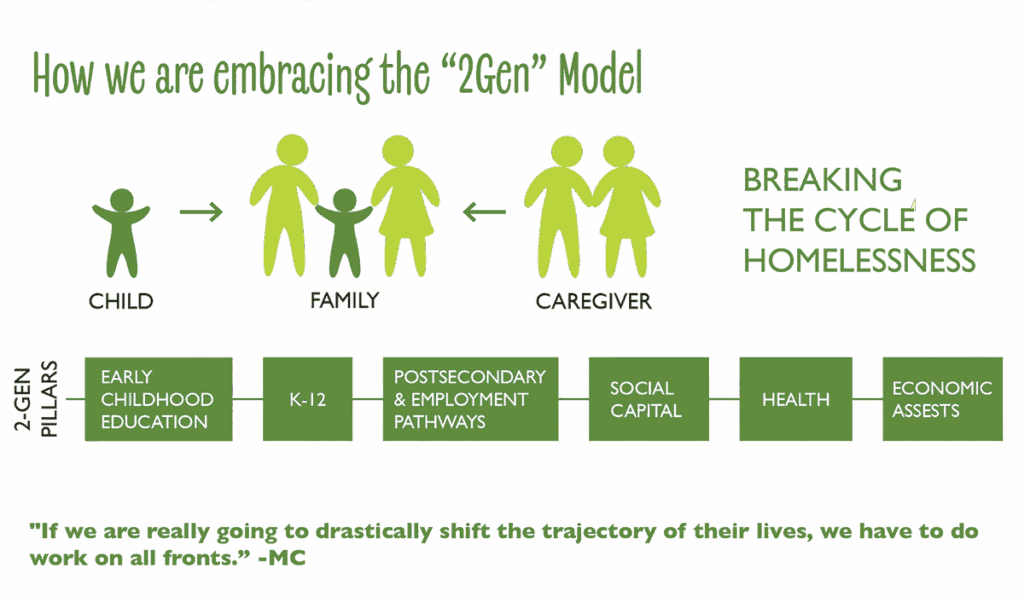
And it’s not their fault. No one ever handed the tools to them to start. It’s this generational malady that has prompted us to embrace the Two-Generation (2-Gen) model as the framework that structures our programs. In doing so, we are ensuring that we provide intentional, coordinated interventions for both our parents and children. Breaking the cycle of generational poverty requires working on all fronts—supporting the child, empowering the parent, and strengthening the family as a whole. If we truly want to shift the trajectory of a family’s future, we must address each critical component together. That’s the heart of our work as a department.”
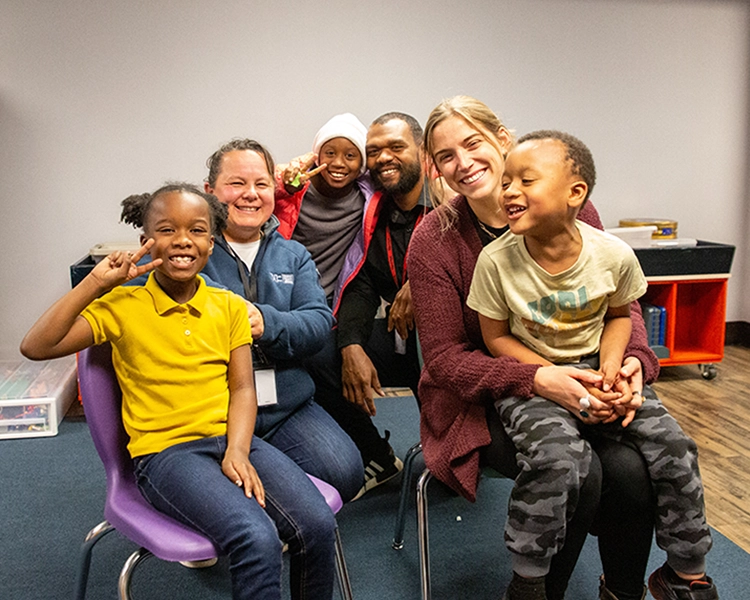
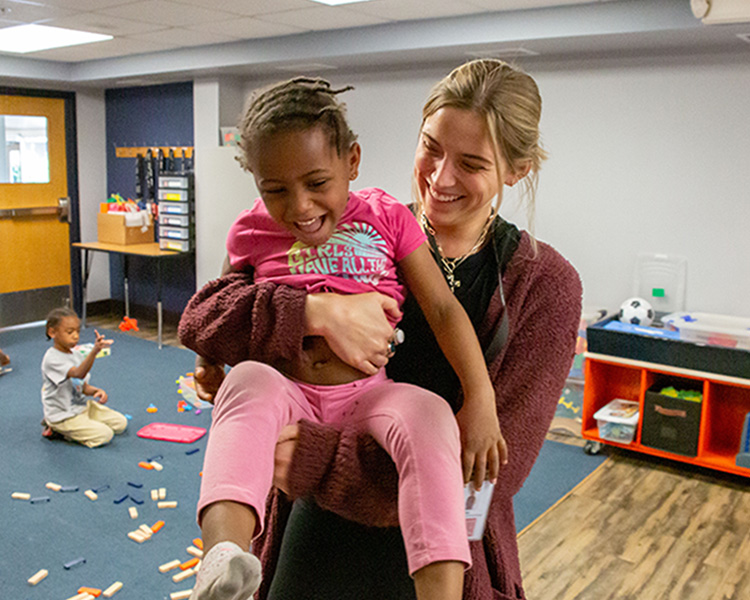
“We’re fortunate to have an incredibly skilled and compassionate team dedicated to investing in kids and their parents. Ultimately, our goal is to be ‘best in class’—not just in how we run our programs, but in the lasting impact we’re making on the lives of the families we serve.”

Asha Leos- Children, Youth & Family Coordinator
What drew you to the Mission?
“I worked with kids in the foster system, kids on the spectrum, kids who were in low-income families, and kids experiencing homelessness. I loved it, but I just felt really called by the Lord to come back to Colorado and serve this community. This feels like an answered prayer. I get to meet kids where they’re at.
I get to talk to them about the Lord and let the Lord heal them. I feel like I’m home and where I’m meant to be.”
What are some of the key things you focus on as a department?
“We’re trying to show the kids that you see limitations, but we see that you can be limitless if you put in the work and you do it. So, we’re going to give you the opportunities, and we’re going to pour all the love and resources that we have into you so that you can do it for yourself. One thing we’re really trying to incorporate is engaging parents with their children’s success, development and education.
We’ve started literacy support groups so that parents can engage with their kids in their reading. We have curriculum packets that they can take home and spend 10 to 15 minutes doing academic work with their kids. And our parents have opportunities to come and see how we engage with our kids. So, we are just increasing those types of academic opportunities but also expanding on the social emotional learning aspect.”
Jesus Esparza- Children, Youth & Family Coordinator
What drew you to the Mission?
“I grew up navigating systems similar to these, going through the juvenile justice system and experiencing a stint of homelessness. Fortunately, I had some people who really influenced me and so now I’m on the other side of that coin, and hopefully doing the same for some of our youth, and specifically our teens.
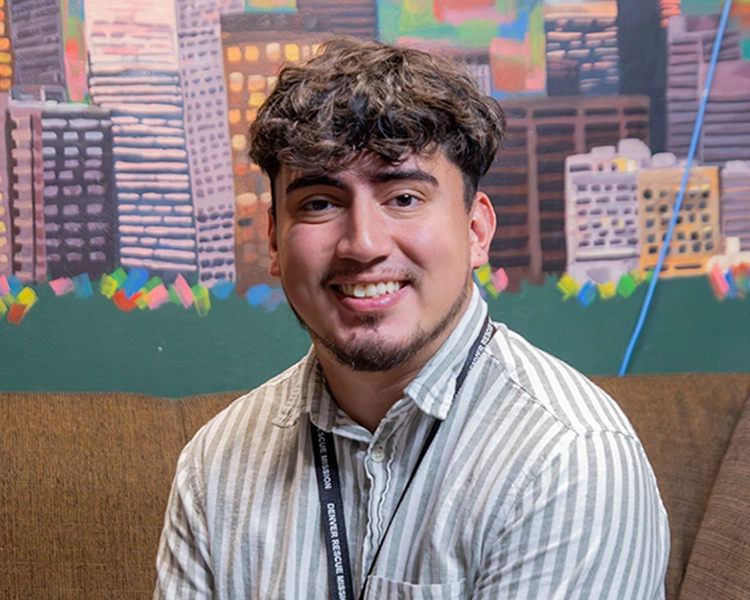
As they enter young adulthood, we are preparing them for what the world has in store for them and reminding them that we’re here to support them and ultimately fuel their journey of growth. I think there’s no better investment into community than into our youth and that’s the beauty of the programming that we do.”
What are some of the key things you focus on as a department?
“My approach is a trauma-informed, culturally responsive approach. I want to give them a toolkit and teach them how to use it, specifically on how to build resilience, break the poverty cycle and shift their mindset, and be able to be active participants in the ‘2Gen’ model.
There is this impending anxiety that a lot of the youth are feeling of reaching young adulthood, and so it’s alleviating that through skill-building workshops and painting the picture that there is more to life than the things that they’ve experienced up until this point. Sometimes it’s encouraging them to exercise and to eat better, how to cook for themselves, how to build a resume, how to get a job, and how to reach independence that is going to allow them to break the cycle for themselves.
We also want them to get opportunities to build a community outside of here. It’s the thing that drives me to wake up every day, to see those little wins. It’s to see a kid bring you their report card and say, ‘I got straight A’s.’ It’s going to a continuation or a graduation and getting tell them I’m proud of them.”
The Future of Homelessness Ends Here
“You might not see it today, but you’ll see it 10 years from now when these kids are contributing members of society. So, if we want to move the needle on homelessness, we have to invest in the next generation.” -MC Crawford
You Can Help Break the Cycle
Our kids aren’t here by choice, so while we can’t prevent them from ever experiencing homelessness, you can join us to help prevent them from ever falling back into the cycle.