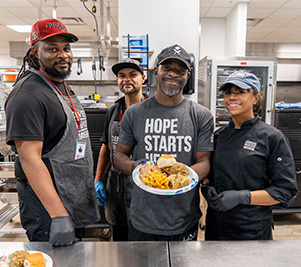
At Denver Rescue Mission, a meal is often the first touchpoint someone has with us, and that first impression matters. So, if the plate speaks first, what does our plate say?
- We were expecting you
- We prepared this for you
- You are worth our best effort
More Than a Meal
At the Mission, a meal doesn’t just fill a belly, satisfy a craving or offer temporary nourishment.
For someone who has experienced homelessness, knowing where the next meal will come from isn’t always guaranteed. But at the Mission, guests can know that when they come through our doors, there will be food and there will be people ready to welcome them.
“After years of serving meals at Denver Rescue Mission, I have come to believe that the most important thing we provide is not food. It is consistency,” Steven Kreis, Senior Director of Food Services, said.
Here, a meal can:
Steady the Body
A full meal helps restore physical and mental strength. When someone is hungry, it clouds everything. Being fed can help someone think clearly, work efficiently and take steps forward.
“The food is delicious. We are spoiled; I don’t know how to explain it. They treat us as we should be.” – Wayne, Shelter Guest
Restore the Rhythm
Meals served at consistent times, 365 days a year, can give structure to a day. That consistency helps establish routine and begins to build trust.
“The fact that I knew that I always had a place to sleep with my things stowed away safely, three meals a day and my own little space and bed was so helpful to me and gave me the space to get my bearings.” – David, Shelter Guest
Rebuild Trust
When someone knows they can come through the doors and receive a meal, they’re learning something bigger: they can count on us.
Open the Door
A meal can’t solve homelessness on its own. But it can create a foundation for conversations, relationships, recovery, housing, and hope.
A meal says, “You can eat today.”
Consistency says, “You can count on us tomorrow.”
What Meals Mean to Families
When you think about Denver Rescue Mission serving meals, you might picture them being served to men in our shelters. While that’s a big part of what we do, we’re also preparing meals each day for children, women and families.
For a parent in our Bridge program or Family Shelter rooms at The Crossing, having regular meals means they don’t have to wonder how they’ll feed their children that day.
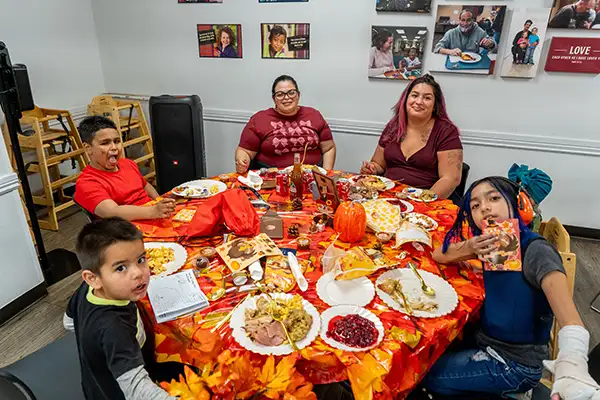

“When me and my kids found out that you could pretty much eat until you’re full, that just was amazing,” Jaime, a single mom, said while in the Bridge program at The Crossing. “I cried and I prayed, ‘Thank you Lord for giving us this place.’ I felt relieved, grateful and at peace knowing that someone was willing to help me.”
Now, she and her family are in housing.
And as we continue to help more children and families at The Crossing, our Food Services team is preparing to meet their needs in an even more intentional way: a dedicated kids’ menu.
With a chef dedicated to preparing kids’ meals, this menu will offer simple, kid-friendly options that ensure each
If Our Plates Could Talk
Just like every meal is made up of many ingredients, dignity is often found in the details of every meal and every interaction at the Mission.
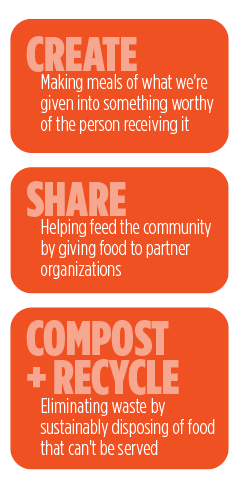
Each chef and Food Services team member isn’t simply putting food on plates; they’re constantly figuring out how to turn what the Mission receives into something safe, nutritious and worthy of the person receiving it.
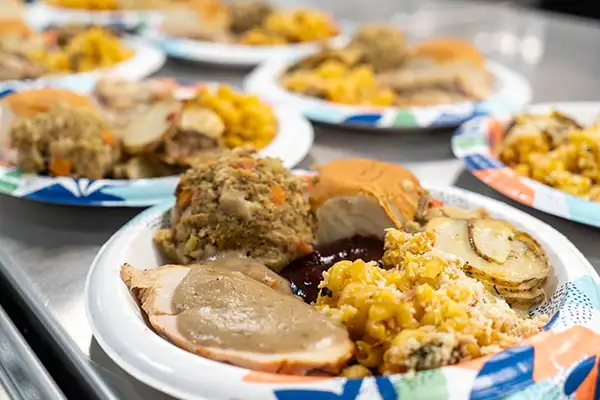
That includes paying attention to individual needs, like guests with documented allergies, medical dietary needs or religious food restrictions.
And now, instead of preparing plates ahead of time, we’re moving toward preparing each plate for the guest, right in front of them. Guests can ask for something to be left off their plate, giving them a small but meaningful choice in what they eat.
“That little bit of control over even something as simple as their meal provides more dignity,” Steven said.
Good Stewards
Our staff are constantly balancing safety, quality, dignity, and resourcefulness— finding creative ways to use good food while making sure every meal meets the Mission’s standards.
The food we receive may come from grocery stores, restaurants, trucking companies, individual donors, and others. And sometimes, the journey doesn’t end at the Mission.
With over 40 partner organizations in the community receiving food from us, we are helping to ensure that everyone in the community has access to food and minimal goes to waste.
Our Chefs Get Creative
For example, when the Mission received 12 pallets of donated tomatoes, our chef team had to figure out how to put them to good use.
Their answer? Something guests ask for all the time: Ketchup.
It Takes a Team to Make Thanksgiving
Gather Your Group & Join Team Thanksgiving!
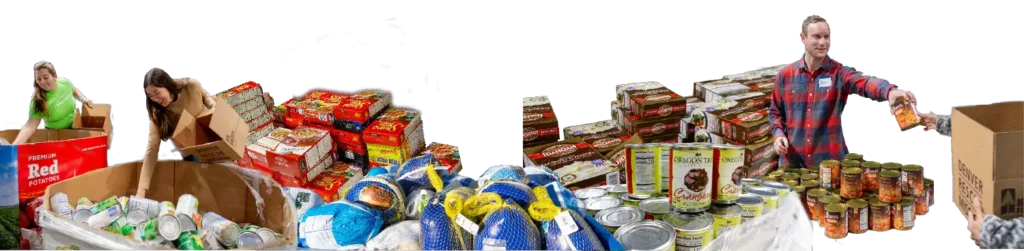
A meal doesn’t happen because of one person.
Help us fill the pantry by November 2nd!

It takes chefs who prepare it, volunteers who serve it, donors who provide it, partners who help make it possible, and a community that believes everyone deserves a place at the table.
Set up a drive with your church, school, neighborhood, or family.
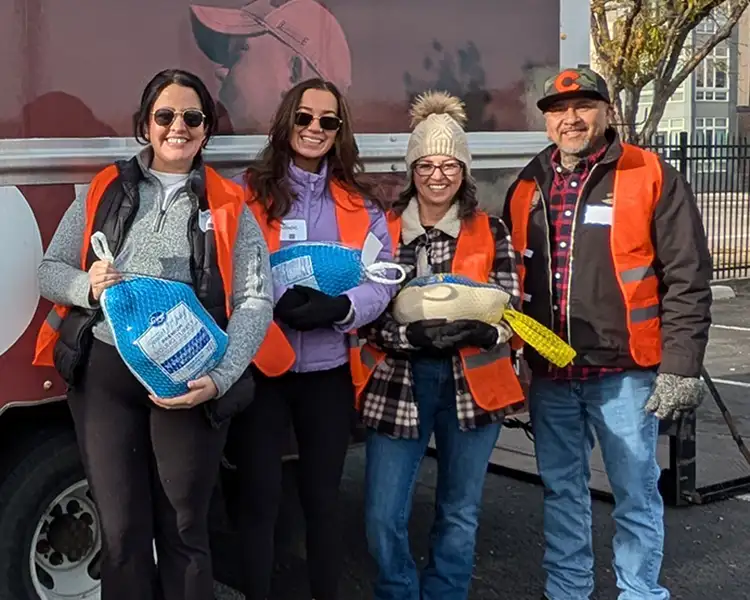
Sign up to drop off your non-perishable food donations and frozen turkeys at DenverRescueMission.org/TeamThanksgiving
“It felt like I had an abundance of everything for Thanksgiving. Everything was so good and everybody sat there as a family. We haven’t been able to do that for a long time,” LaDasmine, a single dad, said while in the Bridge program. “That day kind of brought hope to everybody, even my kids, to see that we can still have a family meal together.”
This Thanksgiving, help put more than food on the table.
Donate today to change lives!
Download Full Newsletter
- A Place at The Table
- The Mission in My Words: Laura Mendez
- Letter From Our CEO